
LISA DER WEDUWE & JAMIE BRETT

YOUTH CLUB – MUSEUM OF YOUTH CULTURE is a not-for-profit organisation working to preserve, share and celebrate youth culture history. Started in 1997, born out of SLEAZENATION MAGAZINE, they archive and share any and all elements of youth culture. Currently they are an unrecognised heritage collection, but aim to open the world’s first Museum of Youth Culture in London.
“At YOUTH CLUB, we believe in the power of youth culture heritage as a catalyst for creativity, self expression and connecting communities. We have observed a continual and growing demand for youth culture to be preserved, shared and ultimately celebrated – connecting the past, present and future generations.”
https://www.youthclubarchive.com/about
HOW CAN A MUSEUM USE DIGITAL MEDIA TO TELL STORIES?
… IN THE CURRENT NATIONWIDE LOCKDOWN CLIMATE?
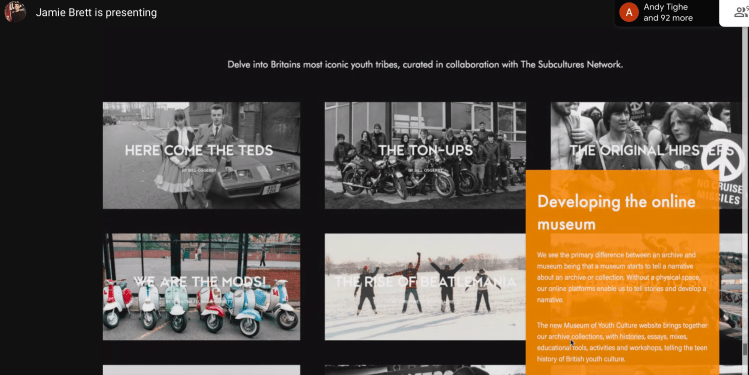


Thoughtful approach to continue to involve isolated and vulnerable folk – providing an offline option for those without access to the internet.

LISA DER WEDUWE & JAMIE BRETT: Q&A
Q: How do you approach including photographs of extreme groups, e.g. racist skinheads? A: Youth Club keep and archive all images provided to them, but they put more spotlights on the positive ones. They provide objective context to the more controversial or offensive images; they don’t want to censor history but they don’t promote or share values with these groups.
Q: How are Youth Club reaching out to less visible communities like ethnic minorities? A: Youth Archive have made a concious effort to shift the archive to feature every kind of person. It is also common that they may have the photographs and materials but not the stories that go with them because they haven’t been preserved or curated for the purpose of showing youth culture in Britain.
Q: Do you reach out to more recent and current young generations from the 1990s and 2000s? A: Most work that has been submitted is from the 1980s. Although some people have been documenting their youth now; young people on nights out, etc. Youth Club are interested in getting more photographs from the 2000s punk/emo scenes. One of the biggest changes from the 1960s-1980s to recent and present day is that in the old days big brands didn’t want to be associated with renegade teenagers. However now big brands get involved in current youth culture to blow it up and make it mainstream so they can appear “hip” and sell their brand. There are so many images all over social media of young people, and that itself is part of current youth culture – but how do you even begin to edit down and archive these images? Many scenes on social media are constructed to appear iddylic and don’t reflect reality.
Q: Does the archive show the revival of trends in recent decades? A: Every scene that is a revival counts as another new youth culture. Every generation has some kind of revival from previous generations. Example: the Rave scene from the 1990s and now in 2019/2020 – it is new for the new generation, doesn’t matter if it has been “done before”. It’s exciting and new for youth today.
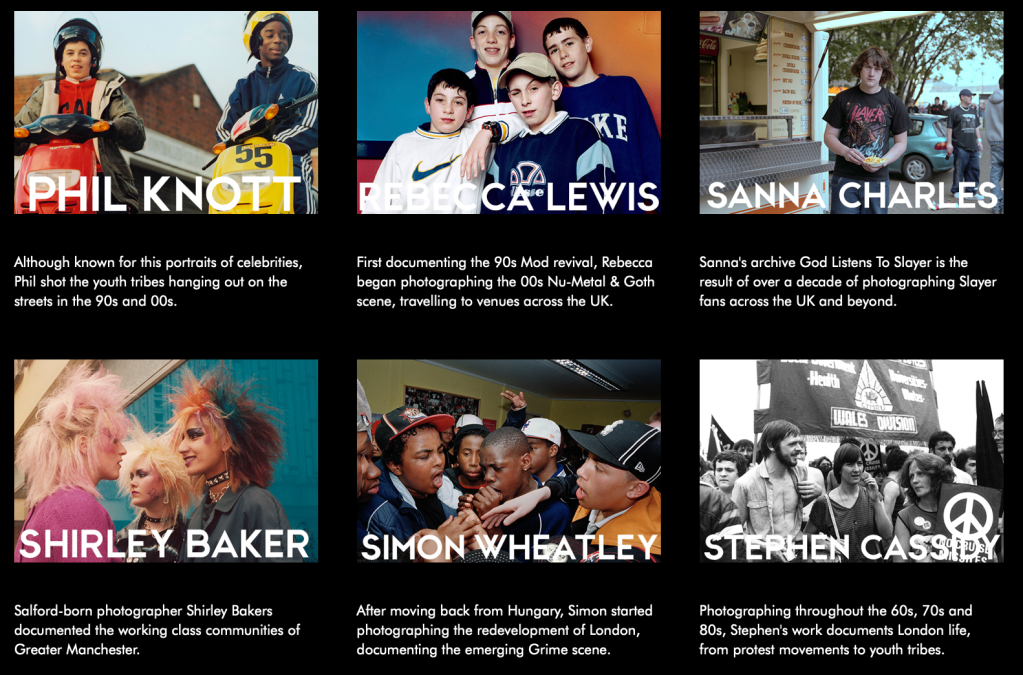
I am really impressed by the Museum of Youth Culture’s archive and work to get photographs from photographers and the public to show honest reflections of youth culture in the 20th and begining of the 21st century. I love social documentary photography and would love to get involved with the Museum of Youth Culture somehow, I could submit personal photographs I have from my family’s collection, and from my own. I would like to do a project revolving around current youth culture and pick a group or two to focus on, probably groups I’m involved in already and would submit this to the Youth Club archive.
 oliverclarkephotoppp1