
From the offset Laia Abril stressed how important it was that when approaching a difficult subject matter it is important to look after the mental health of everyone involved in that project. It can be difficult to be so close to the victim’s trauma narrative, so it is important that everyone involved receives therapy. An artist needs to know and be comfortable with themself especially when working with others that are vulnerable and difficult subject matter.
Laia Abril’s long-term project A History of Misogyny is a visual research undertaken through historical and contemporary comparisons. In her first chapter On Abortion Abril documents and conceptualizes the dangers and damages caused by women’s lack of legal, safe and free access to abortion.
Her collection of visual, audio and textual evidence weaves a net of questions about ethics and morality, and reveals a staggering series of social triggers, stigmas, and taboos around abortion that have been invisible until now.
https://www.laiaabril.com/project/on-abortion/
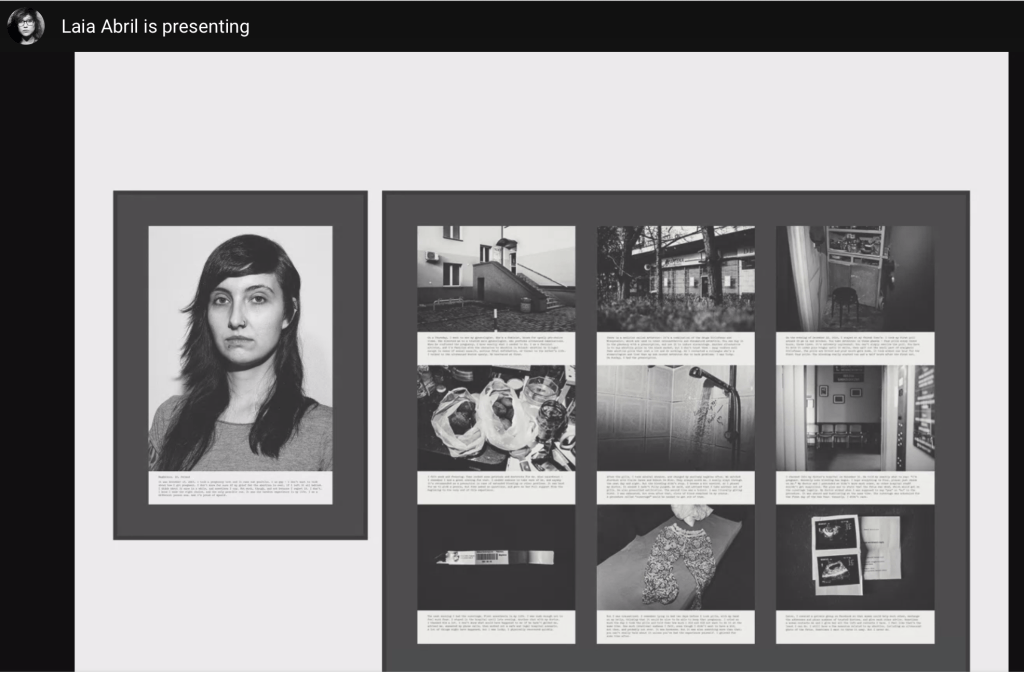

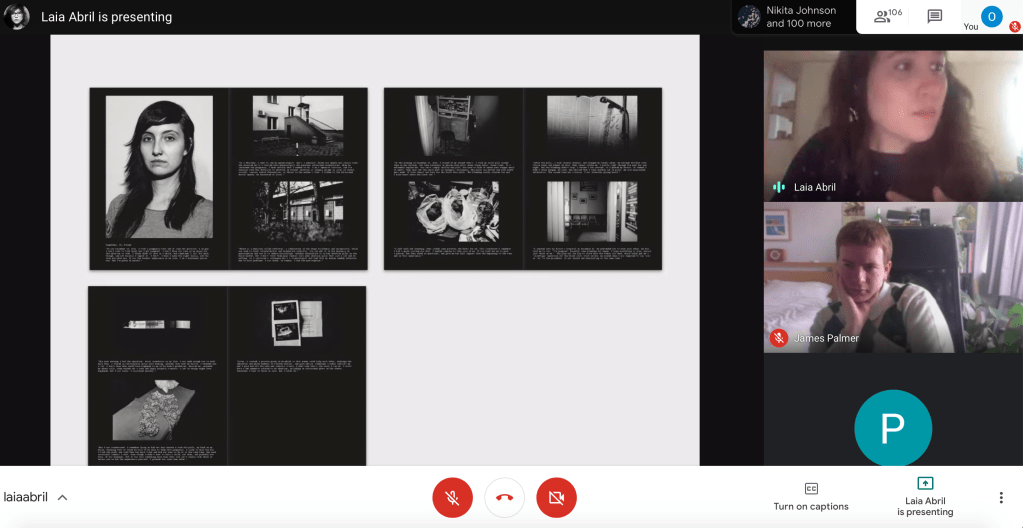
Laia Abril showed us the narrative portraits she had made of women who had pursued illegal abortions. A portrait photograph of them alongside images that tell their story: locations, objects, reconstructions of significant scenes. Abril explained that text is important in her work, stemming from her degree in journalism; she puts the text that tells these women’s stories within the frame rather than as blurb beside the work.

In a project with a big concept you must first define your approach and your role. Not a sociologist or journalist – an artist.
In the exhibition the images aren’t shocking – but the stories are. The exhibition is aimed at people who are on the fence about the topic of abortion and are willing to have a discussion and could become pro-choice. This is why the photographs aren’t graphic.
On the other hand there were slightly censored bloody and graphic images in the book. Abril reasoned that if they bought the book (instead of happening across the exhibition by chance), they must be interested enough in the topic to not be put off by graphic images.

She first exhibited in Ireland during the referendum on legalising abortion. She got a positive response through notes from teenagers, transgender men and people of religious faith. Laia Abril likes having her work in exhibitions because it reaches a wider audience including all kinds of people.
Ownership of appropraited imagery / found images – Abril believes it is justified to use found images to help explain the stories. It is never her own project because she appropriates images, works with people and collaborates with artists. Therefore it is justified in the process.
HOW DO YOU FIND PEOPLE WILLING TO SHARE THEIR STORY & BE PHOTOGRAPHED? – People are more likely to want to be apart of it if you are clear what your intentions are from the start. Make them aware of the consequences and aftermath of them sharing and having their portrait taken: shared online, published in a book, exhibited in a gallery, etc. Never coerce people into your projects, but never give up on searching for willing participants – especially with the internet being available to reach as many people as possible.


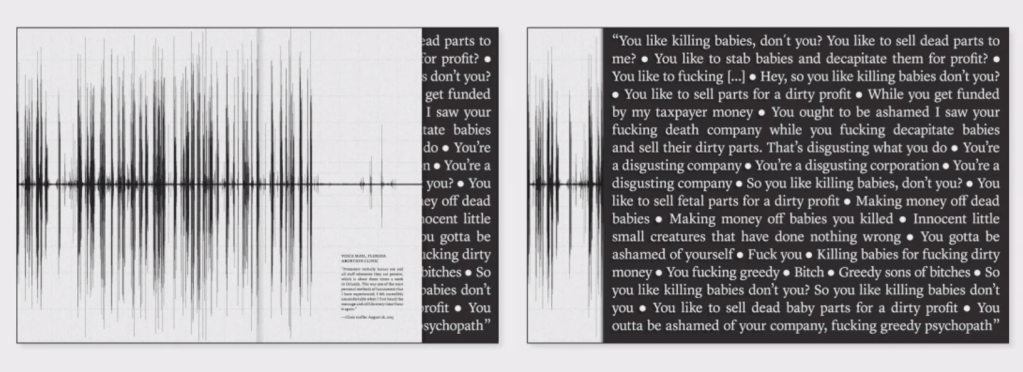
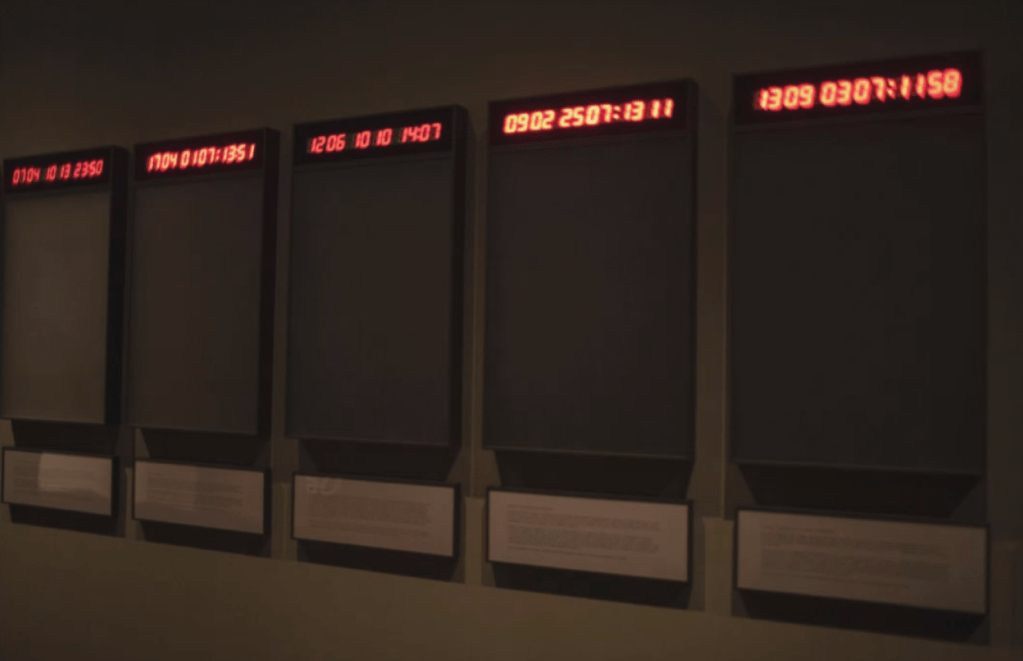
I really liked the audio aspect in ‘On Abortion’ both in the exhibition and in the book. You interact with the exhibition by picking up the phone and the audio recording of an anti-abortion campaigner leaving an abusive voicemail to an abortion clinic. This affects the exhibition-goer and makes them empathetic to staff at the clinic, its and effective way to involve the audience more. I love the visual of the graph of the voice recording showing how loud the caller shouts, as well as the transcript confronting you, Abril thought of another way to communicate the confrontation visually without sound. If this sort of thing was relevant in any of my future projects I would like to experiment involving audio, or visual alternative to audio, in my work.

A part of this subject that she tried to visualise was institutionalised rape, but this didn’t make it into the exhibition or book. Her idea was to represent the different industries by photographing their uniform/clothes. Abril advised when doing something like this you must be upfront with everything you want from that person from the begining so they can prepare and you won’t emotionally exhaust them as much.
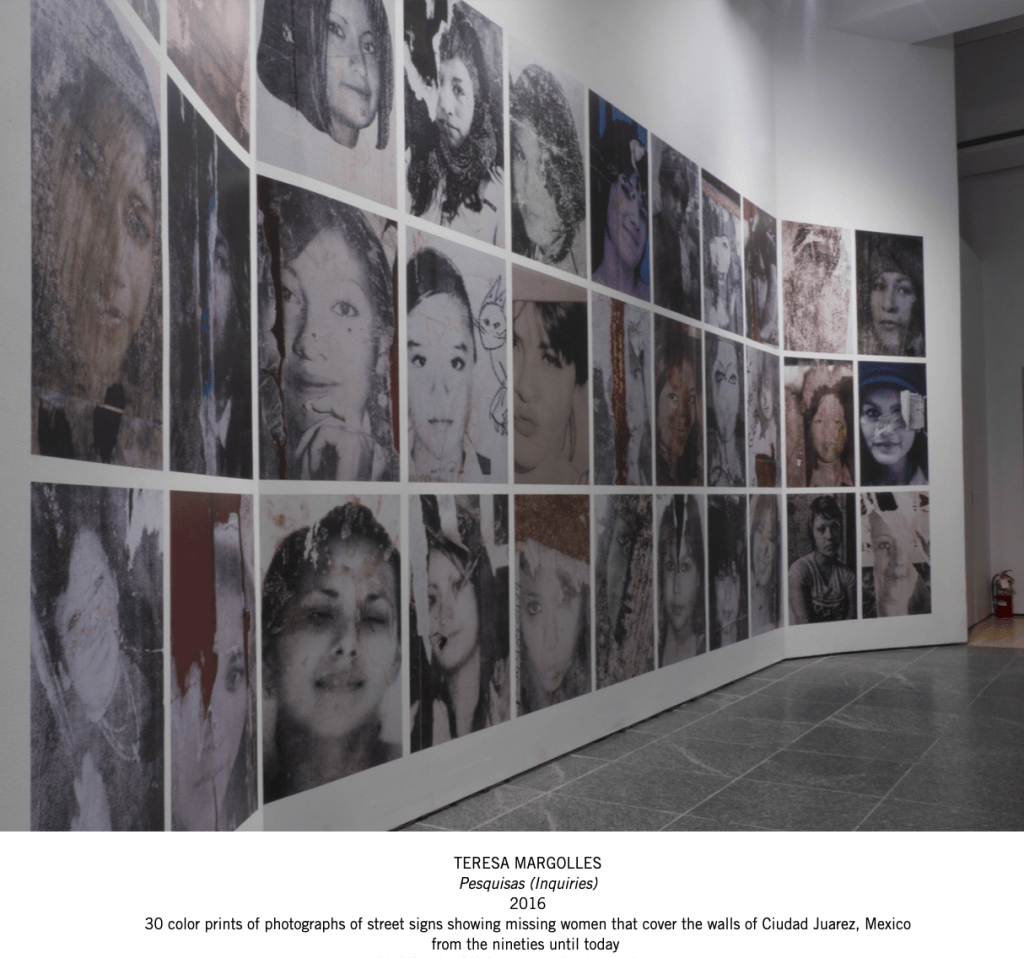
Laia Abril said her influences and inspiration for such sensitive topics are emotional responses and reactions to injustices. She is trying to learn and understand these topics and spread that information to others. Teresa Margolles informs Laia Abril’s visual style and approach to serious subject matter.
 oliverclarkephotoppp1